Cleaford Police Software Blogging Discover the Benefits of Fiberglass Pools For Your Home

Discover the Benefits of Fiberglass Pools For Your Home

Are you dreaming of a backyard oasis that not only looks stunning but also stands the test of time? Look no further than fiberglass pools. As the top choice for discerning homeowners, fiberglass pools offer unmatched benefits that make them the ideal addition to any home. In this comprehensive guide, we’ll explore the Fiberglass Pools Benefits that make these pools a must-have for anyone looking to elevate their outdoor living experience. To make the most of your backyard investment, Explore our solutionsr about the different pool options available.

Why Choose Fiberglass Pools? Unmatched Durability and Longevity

When it comes to investing in a pool, durability is key. Fiberglass Pools Benefits are unparalleled in this regard, offering a long-lasting solution that keeps your pool in pristine condition for years.

1. Rock-Solid Structure

Fiberglass pools are constructed from high-grade fiberglass materials, ensuring that your pool is incredibly resilient. Unlike traditional concrete pools, fiberglass pools are resistant to cracking, even under extreme weather conditions. This means fewer repairs and more time enjoying your pool.

2. Decades-Long Lifespan

One of the most significant Fiberglass Pools Benefits is their longevity. With proper maintenance, your fiberglass pool can last for several decades, making it a wise investment that pays off in the long run. Say goodbye to the constant upkeep and repairs associated with other types of pools.

Effortless Elegance: Minimal Maintenance, Maximum Enjoyment

Who wants to spend their weekends cleaning and maintaining a pool? Fiberglass Pools Benefits shine in this area, offering a low-maintenance solution that lets you focus on what matters most—enjoying your pool.

1. Smooth, Algae-Resistant Surface

The non-porous, smooth surface of fiberglass pools is a game-changer. It prevents algae from taking hold, reducing the need for constant scrubbing and cleaning. This not only saves you time but also keeps your pool looking immaculate.

2. Reduced Chemical Usage

Another of the many Fiberglass Pools Benefits is the reduced need for chemicals. Thanks to the smooth finish, fiberglass pools require fewer chemicals to maintain balanced water chemistry. This not only makes your pool safer for swimmers but also reduces your environmental impact.

Quick and Painless Installation: Dive In Sooner

Imagine this: You decide to install a pool, and within a week, you’re already enjoying it. Sounds like a dream, right? With Fiberglass Pools Benefits, this dream becomes a reality.

1. Pre-Manufactured Convenience

Fiberglass pools come pre-manufactured, meaning the shell is built off-site and delivered to your home. This significantly cuts down on installation time compared to concrete pools, which can take months to complete.

2. Ready in Days, Not Months

The speed of installation is one of the standout Fiberglass Pools Benefits. In most cases, a fiberglass pool can be installed and ready for use within just a few days. This quick turnaround allows you to start enjoying your new pool much sooner than you would with other types of pools.

Tailor-Made Luxury: Design Versatility and Customization

Your backyard is an extension of your home, and it should reflect your style. Fiberglass Pools Benefits include a wide range of design options that allow you to create a pool that perfectly complements your outdoor space.

1. Diverse Shapes and Sizes

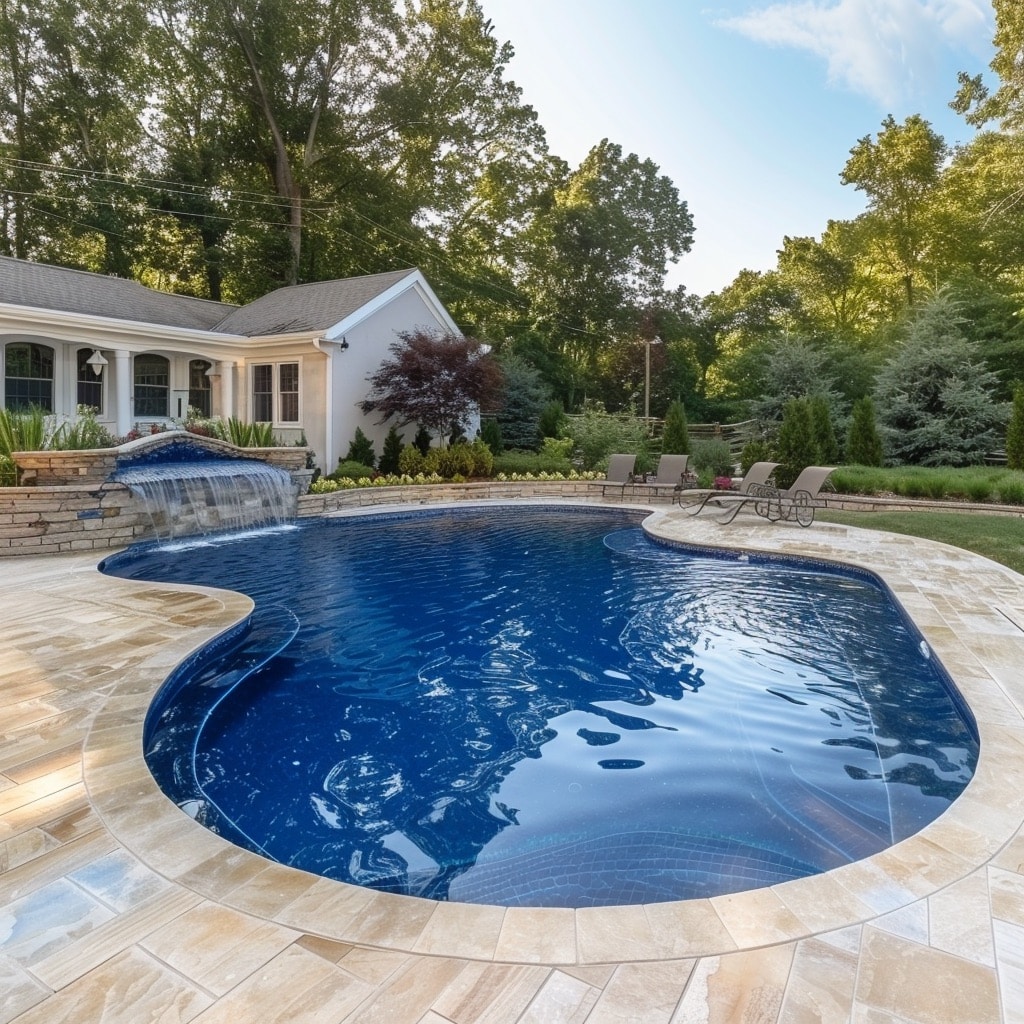
Fiberglass pools are available in a variety of shapes and sizes, from classic rectangles to freeform designs. This versatility ensures that there is a perfect fit for every backyard, regardless of size or layout.

2. Customizable Features

Even though fiberglass pools come in pre-designed shapes, there are still plenty of opportunities to customize. Add water features, LED lighting, or even a spa to create a truly unique and luxurious backyard oasis.

Comfort and Safety: A Pool the Whole Family Will Love

When it comes to safety and comfort, Fiberglass Pools Benefits deliver on all fronts, making them an ideal choice for families. For homeowners considering a pool, Get startedr to ensure you’re making an informed decision.

1. Gentle on the Skin

The smooth, gel-coated surface of fiberglass pools is gentle on the skin, preventing scratches and abrasions. This makes the pool safe and comfortable for swimmers of all ages, from toddlers to grandparents.

2. Built-In Safety Features

Many fiberglass pools come with built-in safety features, such as non-slip steps and benches. These features provide safe entry and exit points, giving you peace of mind while your family enjoys the pool.

Cost-Effectiveness: A Smart Investment

While the Initial cost of a fiberglass pool may be higher than other options, the long-term savings are substantial. Fiberglass Pools Benefits include lower maintenance costs, reduced chemical usage, and energy efficiency.

1. Lower Maintenance Costs

Because fiberglass pools require less cleaning and fewer chemicals, you’ll save money on maintenance over the years. These savings can add up significantly, making fiberglass pools a cost-effective option.

2. Energy Efficiency

Fiberglass pools are more energy-efficient than their concrete counterparts, retaining heat better and reducing your heating costs. This efficiency also extends your swimming season, allowing you to enjoy your pool for more months of the year.

Environmental Stewardship: Eco-Friendly Pool Ownership

If you’re environmentally conscious, Fiberglass Pools Benefits align perfectly with your values. If you’re curious about the benefits of fiberglass pools, Explore designsr to dive deeper into the details.

1. Reduced Chemical Footprint

The lower chemical requirements of fiberglass pools mean that you’re contributing less to environmental pollution. This is a significant Fiberglass Pools Benefits for eco-conscious homeowners.

2. Energy Savings

By retaining heat more efficiently, fiberglass pools reduce the energy needed to keep the water warm. This not only saves you money but also reduces your carbon footprint, making fiberglass pools a green choice for your backyard.

FAQs About Fiberglass Pools

Q1: How long does it take to install a fiberglass pool?
A1: Typically, fiberglass pools can be installed in just 3-7 days, making them one of the fastest pool installation options available.

Q2: What maintenance is required for a fiberglass pool?
A2: Regular cleaning, balanced water chemistry, and occasional inspections are usually sufficient to keep a fiberglass pool in top condition.

Q3: Can fiberglass pools be customized?
A3: Yes, while the basic shapes are pre-designed, you can add features like water fountains, LED lighting, and spas to customize your pool.

Q4: Are fiberglass pools safe for children?
A4: Absolutely. Many models include built-in safety features such as steps and benches, making them safe for families.

Q5: How does a fiberglass pool compare in cost to other types of pools?
A5: While the initial cost may be higher, the long-term savings on maintenance and energy make fiberglass pools a cost-effective choice.

In conclusion, the Fiberglass Pools Benefits are extensive, from durability and low maintenance to quick installation and cost-effectiveness. These pools offer a practical, beautiful, and eco-friendly solution for homeowners looking to enhance their outdoor living space. When planning your dream backyard, it’s essential to Understand more before making any commitments.

Related Post

How to Register Domain NamesHow to Register Domain Names

How to Register Domain Names

How can one register domain names? The first and the foremost step in the process is to check the availability of available domain names for the domain you wish to register. In this day and age, the World Wide Web offers several domains to choose from. Some of them may be available at a cheap cost. You may check the availability of those domains and contact the domain registrar to request for a domain that you wish to register. Another option is to go directly to a -. It is important that you choose the right domain name because the domain name you choose for your site or blog can influence the ranking of your site or blog. If your site or blog has a good ranking on the search engines, you will receive more traffic. However, if your site or blog has a poor ranking in search engines, you may lose more traffic than you gain. Now that you have the list of available domain names, it is important to register domain names to your chosen ones. The easiest way is to visit the domain name registrar’s website. The web address of the web site will contain domain registration information. The registrar’s domain registration information will provide you the names you will be registered. The registrar’s domain registration information will also provide you with the price for which you will be registered. Most domain registration websites offer registration for one, three, or five domain names. The domain names you choose should be easy to remember and easy to spell. You do not want to register a domain that is hard to spell or difficult to remember. You can also choose to register the domain names with hyphens in between the words, so that your website or blog will be easy to remember. When registering the domain name, do not forget to check the domain expiration date. If the domain name expires, you will need to renew your domain name with another company. It is important that you register the domain name so that you can have control over the domain. You want to keep in mind that you do not want the registrar to sell your domain name to another company for a lower price. After you register the domain name, you need to check the domain name for spelling. You do not want to register a domain that has misspelled words or phrases in it because your web site or blog could be banned. If you find the right domain name, it will give your web site or blog an identity. The domain name will also set a unique and identifiable URL for your site or blog.

Is knife harmful or useful?

Is knife harmful or useful?

Is a knife useful or harmful?

Knives can be used to cut food but have sharp edges that can inflict injury. They should be used carefully as they can cut into any part of your body. You should never sharpen a knife beyond its edge. Knives come in many different materials. Some are more expensive than others.

Is knife harmful or useful


Sharp knives are more susceptible to injury

Research has shown that knives can cause more injury than other hand tools. Knives are known to cause strain and sprain injuries. You also need to use a lot force to cut them. Also, workers are not always taking enough breaks in order to prevent injury.

Sharp injuries occur when a sharp piece of metal or a knife penetrates the skin. They can cause severe injury and damage to many organs, such as the liver, the brain, and even the heart.  In the worst case scenario, a knife or a piece of metal can penetrate deeper into the skin and may result in damage to the underlying tissue, organs, and muscles.

Sharper knives will reduce the risk of injury to the musculoskeletal and orthopedic joints. Additionally, a sharper knife will make it easier to finish a task than a duller. Also, clean cuts will heal quicker with a bandage. While jagged cuts will require stitches,

It is possible to avoid injury by using the knife correctly. When you’re cutting food, keep your fingers from the blades. You should use a special tool for opening cans or boxes, and always keep your knife in a safe place when not in use. You should not panic if you cut yourself accidentally while cutting food.  Minor cuts can easily be treated with soap, water, and antibiotic cream. You also have the option to use a bandage.

Plain edge blades are better suited for push-through cuts

When determining which edge type to buy, consider your own personal preference, as well as the task you will be performing. For most daily tasks, a simple edge blade will work well. Serrated and in-between edges blades are better suited for more pressing and slicing tasks. If you are a skilled knife user, you may prefer a plain edge knife, especially if you can create micro serrations with practice.

Both types are great at cutting different kinds of material. The plain edge is better suited for push-through cuts, as it allows for a cleaner, more precise cut. But serrated edge knives are more suitable for slicing. This requires a slower motion. 

Combo-edged blades are also very popular. These blades combine a plain edge with a serrated section near the handle. Combo edged knives can be both convenient and problematic.  The plain edge section can make a clean and quick cut, but the serrated section is more likely to dull if used repeatedly.

Serrated edges are better at cutting wood, rope, as well as other tough materials. These can also be used for cutting woody stemmed plants.

Although durable, skeleton handles can be slippery.

To reduce weight, skeleton handles consist of a hollowed-out or removed tang. To improve grip, it is wrapped in parachute cord or another material. While skeleton handles are durable, they can also be slippery. To provide extra grip, premium knife makers may add bumps or ridges on the handles, especially in cold climates.

Bamboo and plastic are cheaper materials for cutting boards

Bamboo and plastic are cheaper materials for cutting boards but they are less durable and require maintenance. Bamboo boards can split easily and cause splinters in food. These materials might be a good option if money is tight and you don’t need a cutting board of high quality.

Although wooden boards look great, they can be quite expensive. A slab made of solid hardwood can be as high as $300, and the price ranges from $100 to $300. Wooden boards require regular care, which includes oiling with food-grade mineral oils. Plastic cutting boards may be practical and cheap for everyday use but they do not look very attractive. Plastic boards are less expensive, but there are concerns about the health-related and environmental consequences of plastic.

Bamboo is another cheaper material for cutting boards, but it doesn’t have the same aesthetic appeal as wood. Bamboo is less susceptible to moisture and will shrink more easily. Plastic boards can also be not recycled. They will remain in landfills over thousands of years and pollute ground water with leachate.

Bamboo and plastic are less expensive materials, but they should be thoroughly cleaned before use. The dishwasher can clean plastic and bamboo boards, while wooden boards will need to be cleaned manually. Vinegar can be used to disinfect wood boards. Alternately, you can use half a lemon with a pinch of salt. Both can be used as a way to remove stains or odors. Before storing your boards, dry them thoroughly after you have used them.

Serrated blades will be more useful for those tasks that require you to make a lot of’sawing motions’

Serrated blades are designed to create a saw-like cutting edge. They can also be used for ‘backwards and forwards’ motions. These blades are perfect for cutting through cloth, ropes, belts, and other similar tasks. They can also be used on soft materials like bread.

Sharpen serrated blades at a lower level than straight edges should be done occasionally. Use a sharpening device with a serrated edge to ensure that it is not hacked with a flat rock. Instead, use a cylindrical fine diamond steel or ceramic sharpener.

For serrated blades to remain sharp, you will need special sharpening instruments. They may not cut as smoothly as straight edge knives and pose a higher risk of injury. Not all jobs require serrated blades.

A chef’s knives is an example of a knife with a serrated blade. The serrated tip of the knife pierces the skin before reaching the main blade. The chef’s knife is not a combat weapon, nor a tool. It’s not designed to use extreme force, impact, motion, or other extreme actions.

Serrated blades are also better suited for cutting tough materials. Serrated blades are usually thinner than plain edged blades and can tear the material that they are cutting. Additionally, serrated blades require more effort to sharpen.

Rusty knives could cause injury 

While rusty knives may not seem to be a problem at first, it can lead to serious problems if the problem isn’t addressed. This type of corrosion can damage your knife, making it difficult to use the knife again. There are several options to get rid off rust from your knife. To remove rust, you can soak your knife in lemon juice. This requires that you soak the knife for at least 10 minutes in warm water with lemon-juice. Make sure your cup is tall enough for the knife to fit in, and soak it for at least 10 minutes.

Rusting occurs when water binds with the iron in your knives. Stainless steel knives are protected from corrosion by a protective outer layer made of chromium. This layer of chromium binds with oxygen to form a protective outer layer that protects your knife from rust. Carbon steel knives are less resistant to rust.

Avoid leaving your knives out in the rain to prevent rust. Always clean and dry knives after use. Apply some maintenance oil, if it is possible.


Should You Move To Rochester, NY? Pros And ConsShould You Move To Rochester, NY? Pros And Cons

Location and Climate: Exploring Rochester’s location, climate, and how it affects the city’s livability.

Rochester, New York is situated in the northeastern part of the United States. It is located on Lake Ontario’s southern shore and has a humid continental climate. The city experiences warm summers with an average temperature of 80°F and cold winters with an average temperature of 20°F. These weather conditions affect Rochester’s livability by influencing outdoor activities, transportation, and energy consumption.

The location of Rochester provides residents with access to various natural resources such as water bodies, parks, and forests. For instance, residents can enjoy recreational activities like swimming in Lake Ontario during summer or skiing at Bristol Mountain Ski Resort during winter. Additionally, the availability of these resources contributes to the city’s economy through tourism, and all reasons that people are moving to this area

However, Rochester’s location also poses some challenges for its inhabitants. During winter months when snowfall is heavy, roads become slippery making driving difficult for commuters leading to traffic congestion which affects transportation negatively. Furthermore, high winds accompanying storms from Lake Ontario contribute to power outages affecting energy supply that directly impacts households’ heating systems during winter months without electricity backup generators installed.

Cost of Living: Analyzing the cost of living in Rochester, including housing, transportation, utilities, and more.

Rochester, NY is a moderately affordable city to live in compared to other major cities in the United States. The cost of living index for Rochester is 88.3, which means that it is 11.7% cheaper than the national average. Housing costs are one of the biggest expenses for residents in Rochester, but they are still relatively low compared to other metropolitan areas.

The median home price in Rochester is $134,300, which is significantly lower than the national median home price of $231,200. Renting an apartment or house can also be more affordable in Rochester with an average rent of $1,033 per month for a one-bedroom apartment and $1,319 per month for a two-bedroom apartment.

In addition to housing costs being reasonable in Rochester, transportation and utility costs are also generally lower than other major cities. Gas prices tend to be below the national average and public transportation options such as buses and light rail systems offer affordable fares for commuters. Utility bills such as electricity and water are also reasonably priced making living expenses manageable for most residents.

Education: Highlighting the educational opportunities available in Rochester, including schools, colleges, and universities.

Rochester offers a diverse range of educational opportunities for students of all ages. The city is home to numerous public and private schools, ranging from elementary to high school levels. Additionally, Rochester has several colleges and universities that provide higher education options for local residents.

One notable institution in the area is the University of Rochester, which consistently ranks as one of the top research universities in the country. The university offers undergraduate and graduate programs in fields such as engineering, business, nursing, and more. Another popular option is Rochester Institute of Technology (RIT), which focuses on technology-based education with programs in areas like computing, engineering, art and design.

For those seeking smaller class sizes or specialized training programs, there are also community colleges such as Monroe Community College (MCC) and Bryant & Stratton College. MCC offers over 100 degree and certificate programs across various disciplines while Bryant & Stratton College provides career-focused training in fields like healthcare or business.

Overall, with its wide range of educational institutions offering diverse curriculums at various levels – from primary education through postgraduate degrees – Rochester’s educational landscape caters to everyone who desires learning opportunities within their budgetary constraints.

Job Market: Examining the current job market in Rochester, including major industries, employment rates, and job opportunities.

The job market in Rochester is diverse, with major industries ranging from healthcare to education. The city’s largest employer is the University of Rochester Medical Center, which provides over 26,000 jobs. Other significant employers in the area include Wegmans Food Markets and Paychex Inc., both Fortune 500 companies.

Despite a slight decrease in employment rates due to the COVID-19 pandemic, Rochester has seen recent growth in job opportunities. In particular, there has been an increase in demand for workers skilled in technology and advanced manufacturing. The city’s proximity to major metropolitan areas such as New York City and Toronto also provides additional job prospects for its residents.

Rochester offers various resources for those seeking employment opportunities. The Monroe County Department of Workforce Development provides career counseling services and workshops on resume building and interviewing skills. Additionally, local colleges such as St. John Fisher College offer career fairs where students can connect with potential employers.